CCP Turned Out to Be Ridiculously Bad at Cognitive Warfare
Shinji Takeuchi
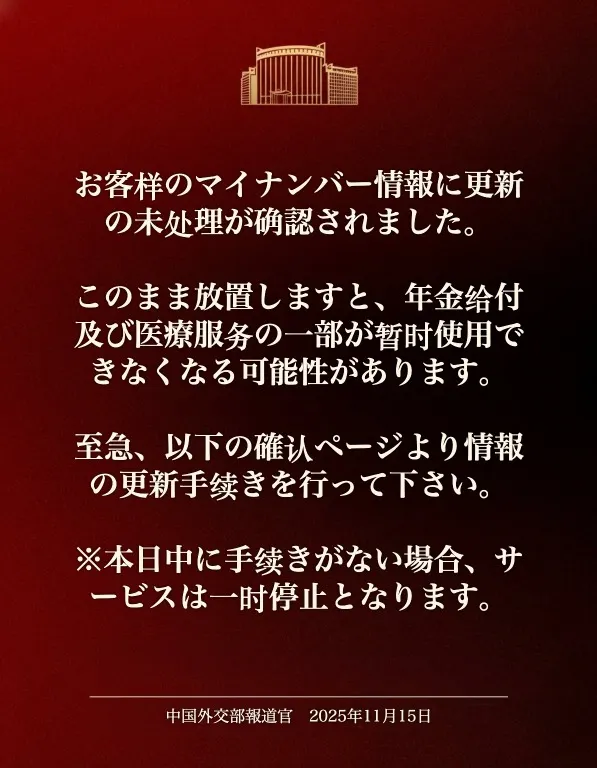
For years, many in the West have assumed that the Chinese Communist Party (CCP) is highly skilled at cognitive warfare. People believed Beijing could shape foreign public opinion, steer international narratives, and manipulate the global information environment with strategic precision.
The recent confrontation with Japan over Prime Minister Sanae Takaichi's Taiwan remarks makes clear that this belief is misplaced. Rather than demonstrating mastery, the CCP revealed just how clumsy and ineffective it can be.
Prime Minister Takaichi stated in parliament on November 7 that if China were to launch military attacks on Taiwan and, in the process, strike United States forces, the situation could constitute a "survival-threatening" scenario for Japan.
Just to help casual watchers understand, a "survival-threatening" situation is a legal classification under Japanese law that serves as the basis for subsequent defense action. It is defined as a situation in which "an armed attack is launched against a foreign country that has a close relationship with Japan (i.e., the United States, clarification added by the author), creating a clear danger to Japan's own survival and fundamentally undermining the Japanese people's rights to life, liberty, and the pursuit of happiness." (Source: Japanese Ministry of Defense.)
This classification matters because, while Japan can already defend itself if attacked directly, as any sovereign nation can, it previously lacked a clear legal basis for collective self-defense. Under this framework, in the event of a "survival-threatening situation," Japan may engage in collective defense measures with its ally, the United States, after securing approval from the parliament (except in extreme emergencies).
It is therefore highly restrained in nature, with substantial civilian and parliamentary oversight. Above all, it would not be invoked unless China launched an armed attack against Taiwan or the United States, meaning its activation depends entirely on China's own actions.
Aside from its obvious logical basis, this interpretation has been part of Japanese security policy for years. Her remark simply expressed it openly in public.
Beijing reacted far more aggressively than expected. The first response that drew attention came from Xue Jian, the Chinese Consul General in Osaka. He posted an outright gangster-like message on X in Japanese, saying that "China had no choice but to cut off Takaichi's dirty neck" and asking whether Japan was ready. Japan immediately lodged a formal protest, and the post was quickly deleted.
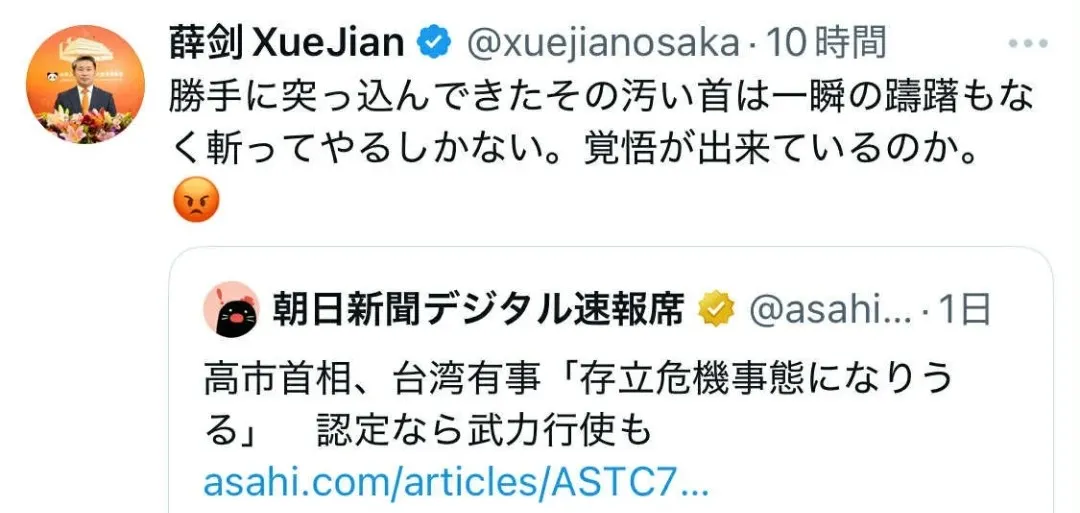
The official X post by the Chinese Consul General in Osaka, threatening to decapitate Prime Minister Takaichi.
The meme battle began when the Ministry of Foreign Affairs in Beijing published a series of dramatic propaganda-style posts on X.
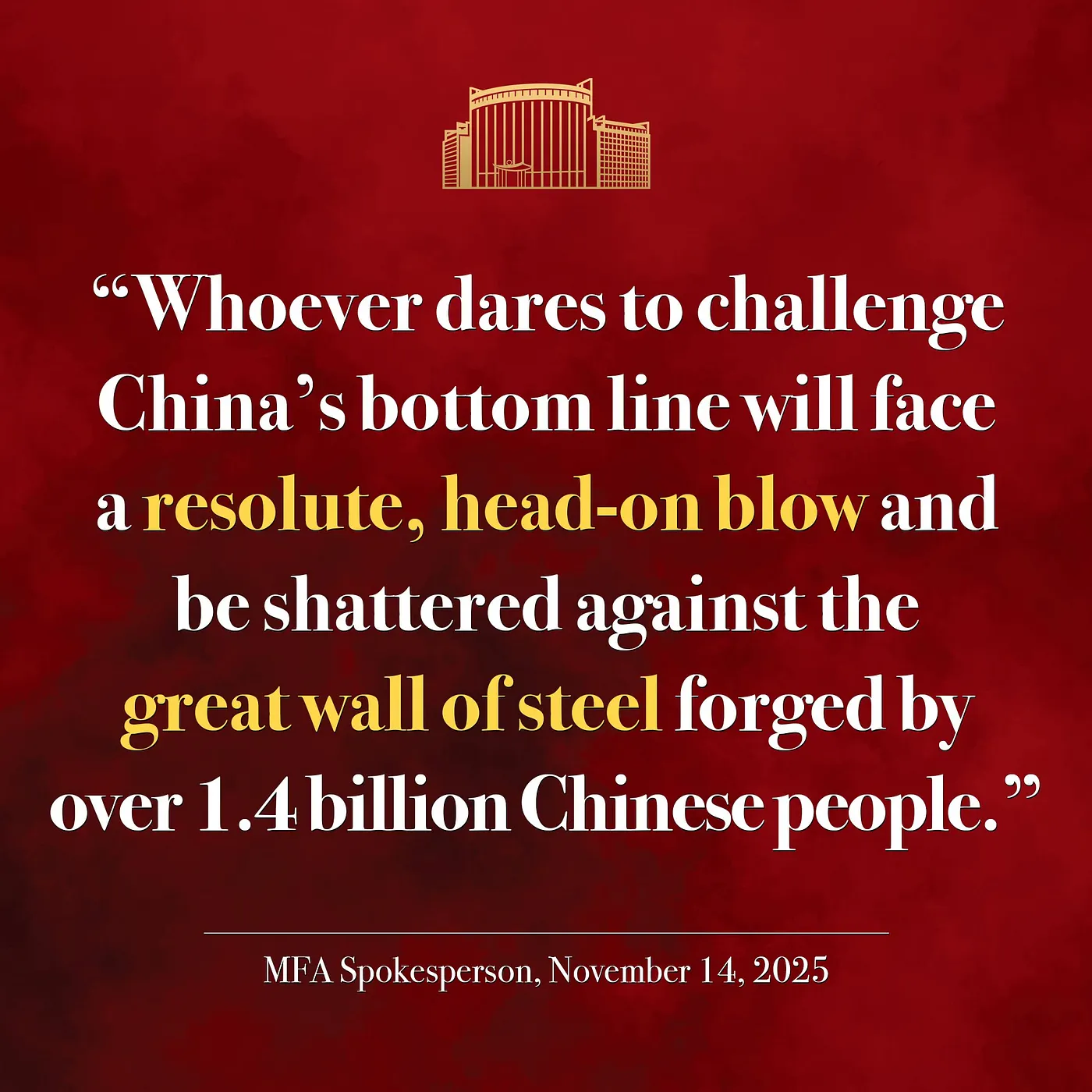
An X post by the Chinese Ministry of Foreign Affairs on November 14, 2025, triggered an avalanche of memes.
These were issued by spokesperson Lin Jian and by affiliated official accounts. The statements were written in the tone of old Mao-era political pamphlets and were accompanied by stylized graphics.
The messages included lines such as "Is Japan going to repeat its past mistakes of militarism," "If Japan dares to meddle in the cross Strait situation, it will definitely meet a firm response from China," and "Those who play with fire will perish by it."
These posts were intended as warnings. Instead, they appeared cartoonishly theatrical and awkwardly phrased. Japanese and Taiwanese social media users immediately turned them into memes. The graphics quickly became templates for jokes, parodies, and humorous commentary on Chinese propaganda, including the examples shown here. These memes spread rapidly and completely overwhelmed the original message.
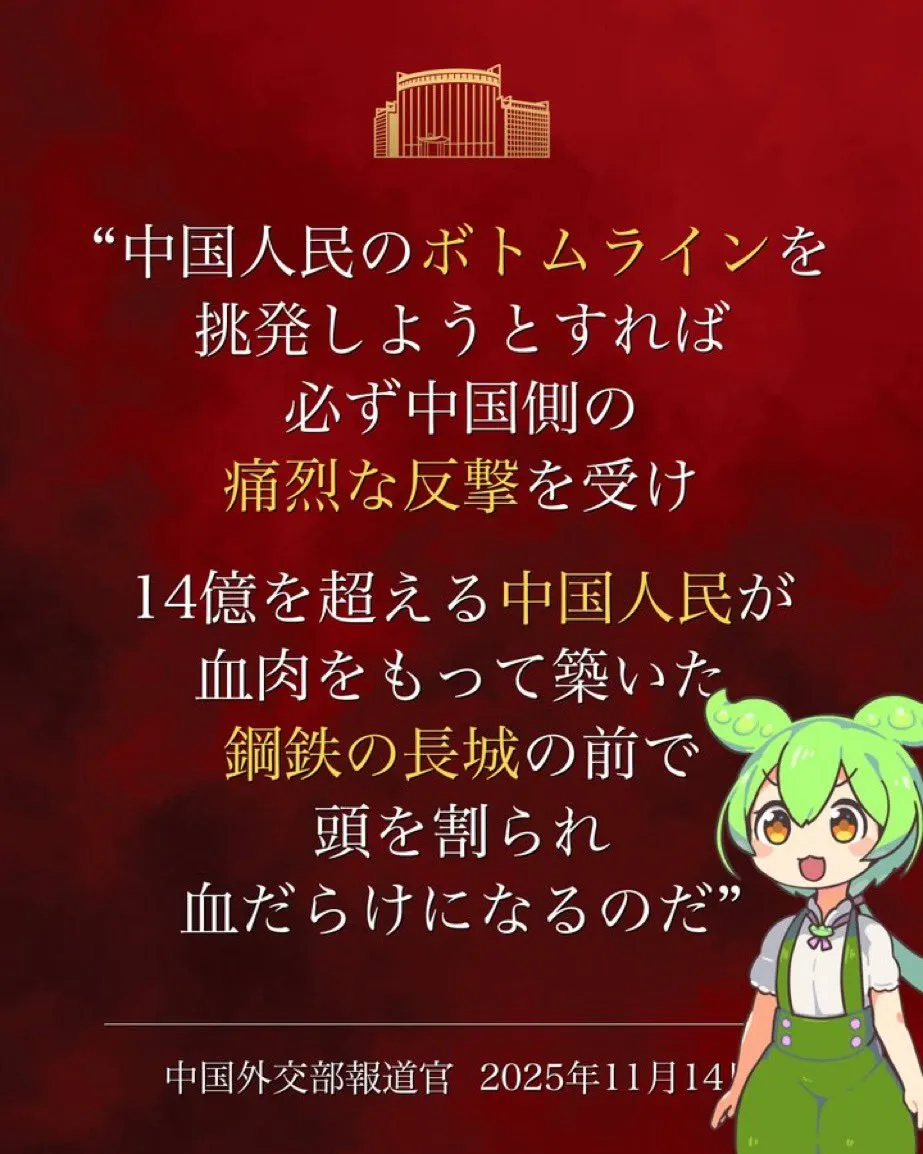
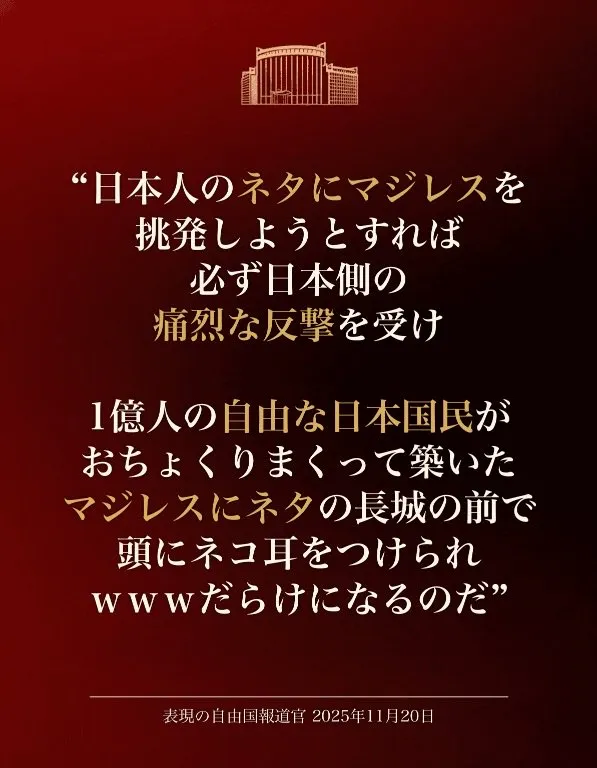
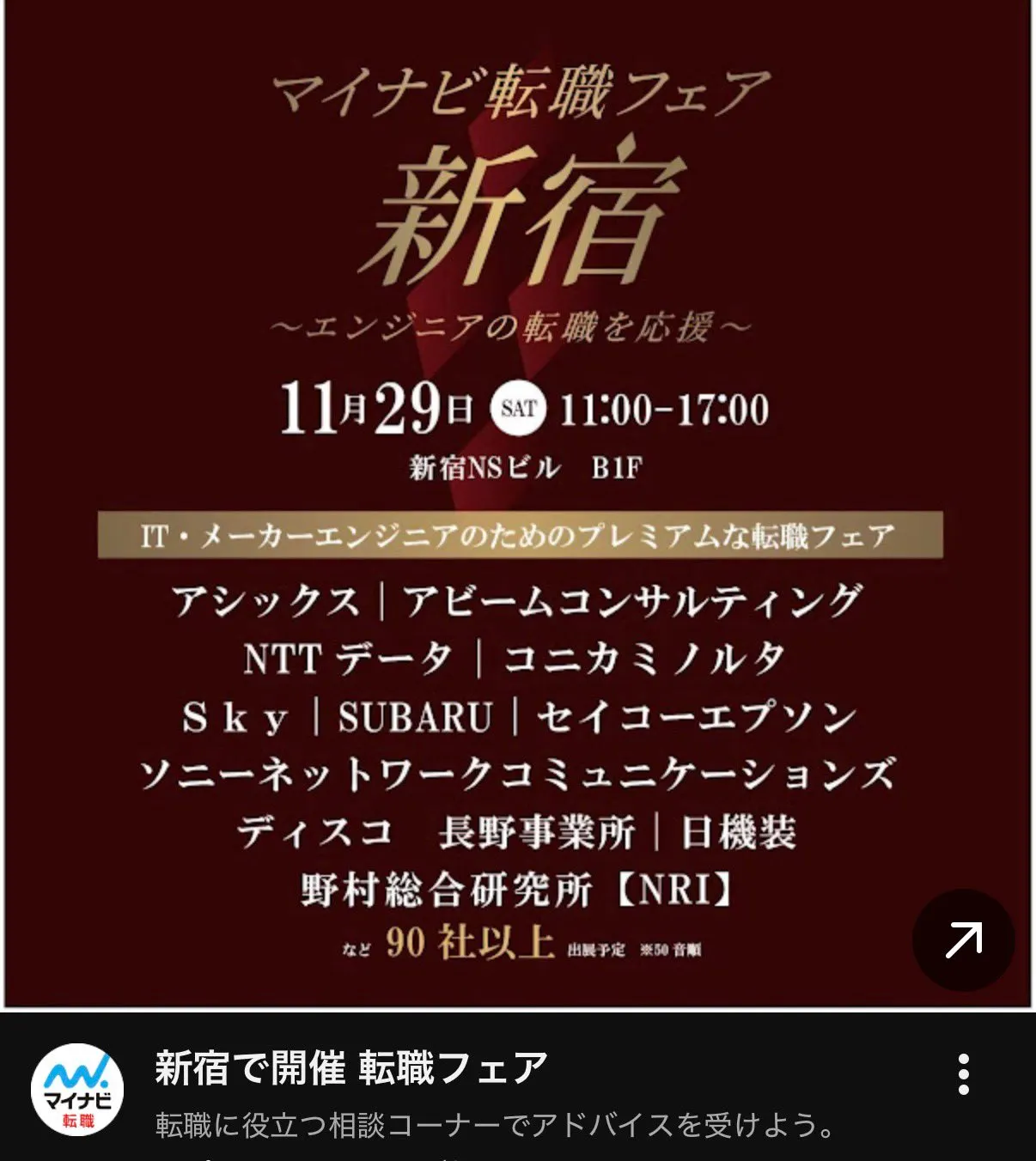
Some of the memes that flooded X after the post by the Chinese Ministry of Foreign Affairs.
The narrative also slipped out of Beijing's control immediately.
China tried to frame Japan as a country drifting back into militarism. Instead, the dominant reaction in Japan was simple laughter at the Ministry of Foreign Affairs and its bizarre visual messaging, which immediately revealed how misplaced the framing was. Rather than shaping a narrative, Beijing merely exposed itself as an insecure, petty authoritarian state with almost no grasp of how modern information spaces actually function.
The episode thoroughly debunked the widespread myth that the CCP possesses any real sophistication in cognitive warfare. In reality, its leadership appears hopelessly insulated from global culture, and its diplomats and online surrogates behave less like trained professionals skilled in nuanced messaging and more like armchair nationalists shouting from their mother's basement.
Far from being a master of cognitive warfare, the CCP revealed how remarkably bad it can be when faced with an open and creative public response.