An Inconvenient Woman
Shinji Takeuchi
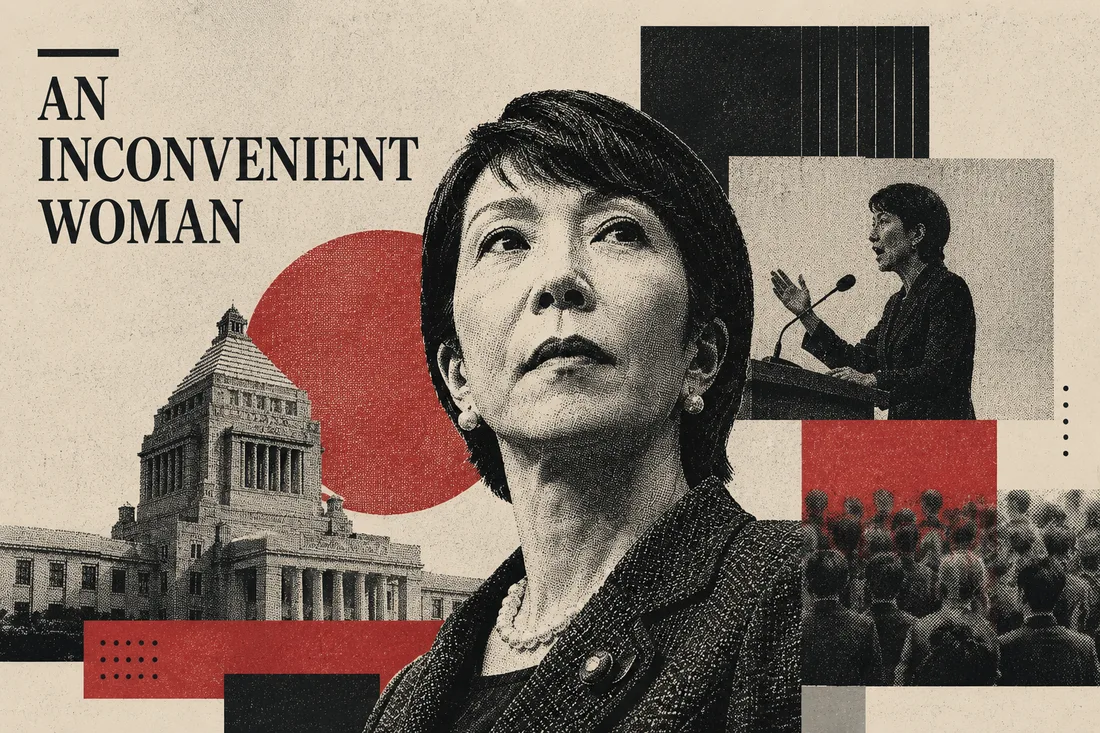
Japan may soon have its first woman prime minister. And liberals cannot decide whether to cheer or look away. This is the awkward case of Sanae Takaichi.
For decades, progressives have railed against Japan's bleak gender record. And understandably so. In the 2025 Global Gender Gap Report, the country ranks 118th out of 148 nations, dead last among the G7. Women hold only 16 percent of seats in the House of Representatives, placing Japan near the bottom worldwide. The demand has always been clear: more women in power.
Now that the chance is real, visible discomfort sets in. Shigeru Ishiba's resignation has opened the path for Takaichi. Yet instead of celebration, her critics fidget uneasily.
Takaichi is not their heroine. She defends traditional family values. She rejects fiscal austerity and advocates bold public spending. She refuses to engage in the politics of apology over history. On foreign policy, she is hawkish (by Japanese standards, that is), calling for a stronger stance on defense and diplomacy. She is blunt, unyielding, and far more likely to find common ground with Donald Trump than with her liberal opponents.
In short, she is the wrong kind of woman. And this leaves liberals in a difficult position.
If gender equality were genuinely treated as a principle above all else, as its supporters profess, her ideology should not matter. The milestone itself should be cause enough for celebration, especially since Takaichi's ascension would almost certainly improve the gender-gap ranking they have so faithfully cherished.
Yet the silence around her proves otherwise: gender equality is applauded only when it produces the right kind of ally, only when it is politically convenient.
Here lies the irony: conservatives may soon deliver Japan's first female prime minister, while liberals look the other way. The real losers are not only those who spent endless energy nitpicking every trivial detail about Takaichi, from her makeup to her smile — criticisms that would have been condemned as blatant misogyny if directed at a liberal woman — but also the very women still struggling to break through Japan's political and social glass ceiling.
They are left to watch as the supposed champions of equality fall silent at the very moment their voices are needed most, just when the glass ceiling begins to crack and, with a little push, could shatter entirely. In effect, they are told that they must be the right kind of woman to deserve support from their own gender, even in the pursuit of gender equality itself.
That might make sense if this were about men. But we have long been told that closing the gender gap is of overriding importance, more fundamental than the natural diversity of policy views or character within any gender. To now say, at this pivotal moment, that gender no longer matters and that "it's the policies that count" is not just inconsistent. It is a complete reversal of what they have been preaching all along.
And so, Japan's feminists have lost all credibility, ironically thanks to the country's first likely female prime minister.